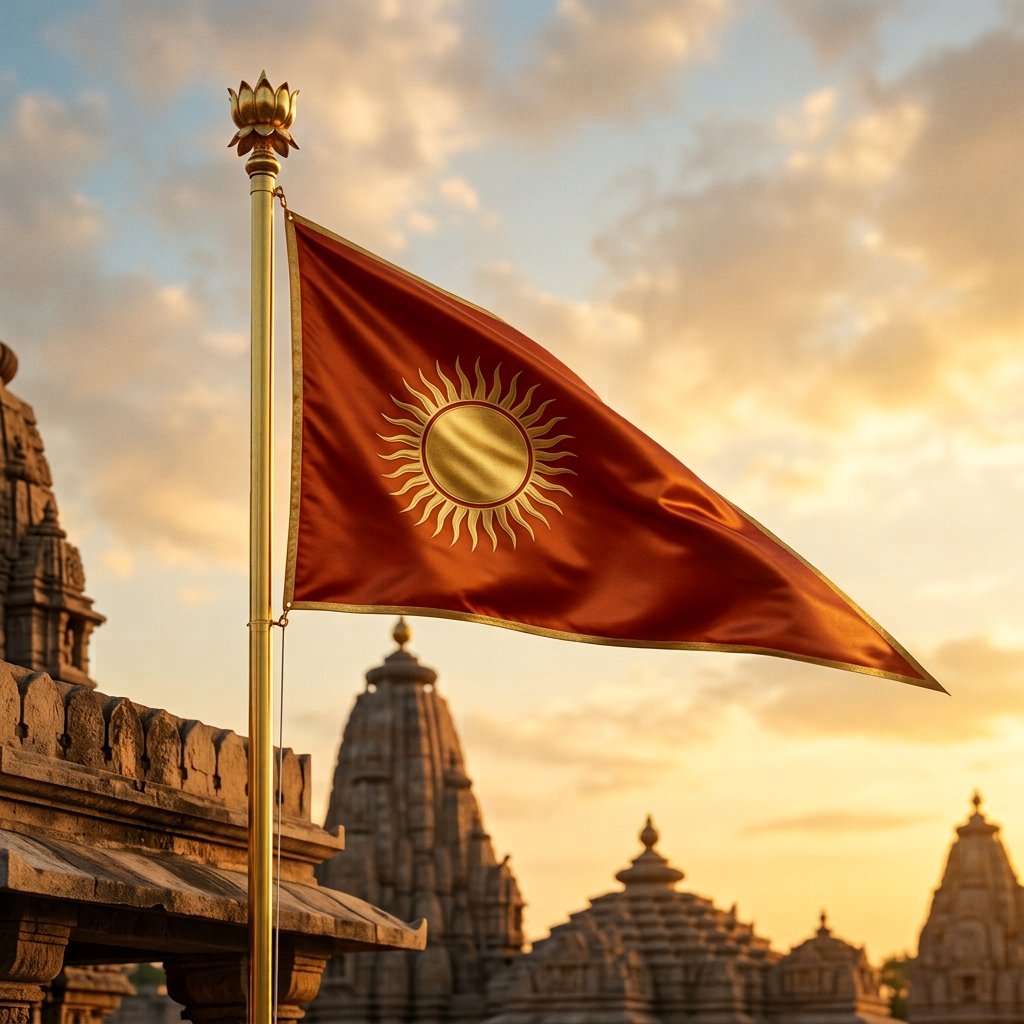
Completely rejects deceitful religion
Here dharma is utterly stripped of deceit (kaitava): 'dharma projjhita-kaitavo 'tra' (SB 1.1.2).
श्रीमद्भागवत
Also known as ब्रह्मसम्मितम् · पुराणार्कः · सात्वती श्रुतिः · भागवतम् · Brahma-sammita (measured as Brahman) · Purana-arka (sun among the Puranas) · Satvati-shruti (the Veda of the Satvatas) · Srimad Bhagavatam
The Srimad Bhagavata Purana is the crown of the eighteen Maha-puranas — ascribed to Vyasa and centred wholly on Krishna-bhakti; Vaishnava tradition honours it as the 'fifth Veda'. In the processed verses: it is the dharma free of deceit, the supreme religion of the sincere, teaching the ultimate reality and uprooting the threefold misery (SB 1.1.2); the ripened fruit of the Vedic wish-tree delivered through Suka's mouth (1.1.3); 'measured as Brahman', the chronicle of Uttamashloka composed by the venerable rishi (1.3.40); the essence of the essence of all Vedas and Itihasas (1.3.42); the risen sun of Puranas for the Kali-afflicted (1.3.44). Its constant service makes devotion steadfast (1.2.18), and in its server's heart the Lord is established at once (1.1.2).
Śrīmad Bhāgavata Mahāpurāṇa 1.1.2 — Sanskrit Wikisource (pinned oldid=110172)
Here dharma is utterly stripped of deceit (kaitava): 'dharma projjhita-kaitavo 'tra' (SB 1.1.2).
It is the highest dharma of the envyless sincere: 'paramo nirmatsaranam satam' (SB 1.1.2).
It teaches the real substance, is auspicious and uproots the three miseries: 'vedyam vastavam atra vastu shivadam tapa-trayonmulanam' (SB 1.1.2).
By its attentive, loving service the Lord is at once bound in the heart: 'sadyo hrdy avarudhyate 'tra kratibhih shusrushubhis tat kshanat' (SB 1.1.2).
It is the ripe fruit of the Veda-tree mixed with nectar: 'nigama-kalpa-taror galitam phalam shuka-mukhad amrita-drava-samyutam' (SB 1.1.3).
By ever serving the Bhagavata, devotion becomes unwavering for the Lord: 'bhagavata-sevaya bhaktir bhavati naishthiki' (SB 1.2.18).
'Idam bhagavatam nama puranam brahma-sammitam uttama-sloka-caritam cakara bhagavan rsih' (SB 1.3.40).
'Kalau nasta-drsham esha puranarko 'dhunoditah' (SB 1.3.44).
'idam bhagavatam nama yan me bhagavatoditam, sangraho 'yam vibhutinam tvam etad vipuli-kuru' (SB 2.7.51) — the same lineage reaches Vyasa through Narada at SB 1.5.
The measure of a kalpa, the course of time, the extent of the cosmic egg, the determination of varna and ashrama, the dharma of each yuga, the deeds of the avataras, the enumeration of principles, the method of yoga, dissolution, bondage and liberation (SB 2.8.12-23); 'he set himself to relate it all in order' (SB 2.8.29).
'tasma idam bhagavatam puranam dasha-lakshanam, proktam bhagavata praha pritah putraya bhuta-krit' (SB 2.9.43); 'naradah praha munaye sarasvatyas tate... vyasaya' (SB 2.9.44) — the lineage completed at SB 1.5.
'dashamasya vishuddhy-artham navanam iha lakshanam, varnayanti mahatmanah' (SB 2.10.2) — the organising principle of the entire Purana.
Maitreya gives his reason for setting the Bhagavata Purana going and carries its origin back to the Lord: 'pravartaye bhAgavataM purANaM yad Aha sAkShAd bhagavAn R^iShibhyaH' (SB 3.8.2). The word 'sAkShAt' states that the telling was direct.
The Srimad Bhagavata was composed by the great sage, i.e. Vedavyasa: 'srimad-bhagavate maha-muni-krite' (SB 1.1.2); Vyasa speaks in 1.2.1-4 and the work's colophons read 'veda-vyasah'. Evidence: STRONG_CONTEXT within the processed corpus.
The Bhagavata-nectar flowed from Suka's mouth: 'suka-mukhad amrita-drava-samyutam' (SB 1.1.3; ablative of source). Evidence: EXPLICIT. Direction verified: text <- narrator.
The Bhagavata is the ripened fruit of the wish-yielding tree of the Vedas: 'nigama-kalpa-taror galitam phalam' (SB 1.1.3). Metaphor stated by the text itself; recorded as a textual (not botanical) relation. Evidence: EXPLICIT.
By constant service of the Bhagavata, inauspiciousness being nearly gone, steadfast bhakti arises for the Lord: 'nityam bhagavata-sevaya... bhaktir bhavati naishthiki' (SB 1.2.18). Evidence: EXPLICIT.
The Bhagavata is the essence of the essence of all Vedas: 'sarva-vedetihasanam saram saram' (SB 1.3.42). Evidence: EXPLICIT.
The Bhagavata is likewise the essence of the Itihasas (SB 1.3.42). Evidence: EXPLICIT.